


Kendrick, a Cherokee Nation citizen, faces first-degree manslaughter and leaving-the-scene charges capped at far less prison time than federal court would allow; next hearing set for Aug. 20
By Cara Cowan Watts, Cherokee411.com
COLLINSVILLE, Okla. — A Collinsville man charged in the July 3 death of a Collinsville mother of seven pleaded not guilty Tuesday, July 28, in Cherokee Nation District Court, where his case is being prosecuted under the tribe’s criminal jurisdiction.
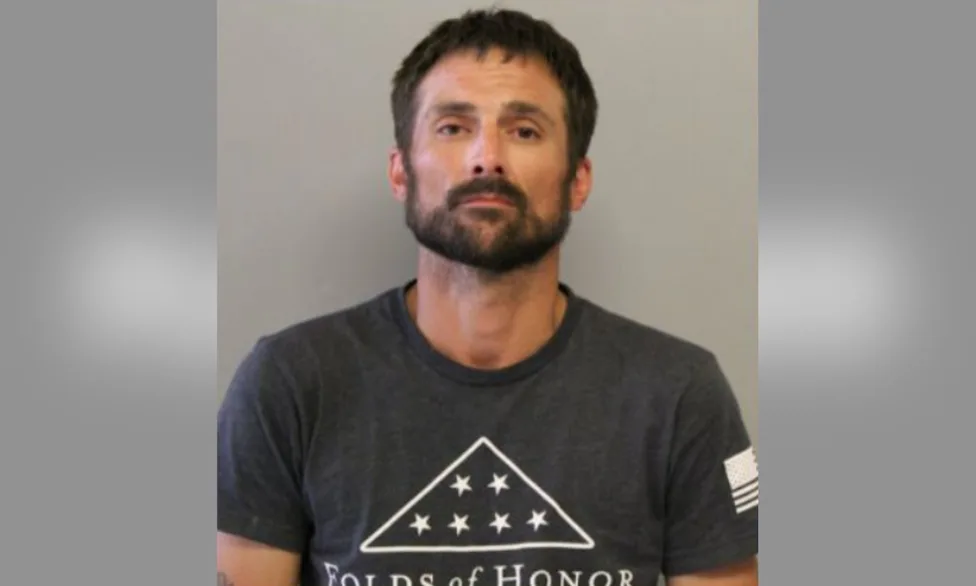
Tyler Dale Kendrick, 39, a Cherokee Nation citizen, entered his plea during his arraignment and was ordered held without bond. His next court appearance is scheduled for 10 a.m. Aug. 20 in Cherokee Nation District Court in Tahlequah, according to court records and Cherokee Nation Marshal Service jail-hold information.
Kendrick is charged with one count of first-degree manslaughter by automobile and one count of leaving the scene of a fatality collision in the death of Amber Rena Lee, 37, also known as Amber Pippin. The felony charges were filed in Cherokee Nation District Court on July 21.
According to the charging document, Kendrick caused Lee’s death by “driving a 2012 Dodge Ram 3500 in a heat of passion and in a cruel and unusual manner” and striking her, then leaving the scene. He was later located and taken into custody in Owasso after license plate reader cameras and a police drone tracked his vehicle to the area of 116th Street North and Garnett Road, Owasso Police Capt. Nick Boatman told News On 6.
What Happened July 3
Collinsville police say Lee and Kendrick, who had been in a dating relationship, met at a QuikTrip near Highway 75 and Highway 20 in Collinsville on July 3 so Lee could return property to Kendrick. A friend had driven Lee to Kendrick’s house and back to the store, where Kendrick was waiting, parked behind her vehicle, according to Collinsville Police Chief Matt Burke.
An argument broke out over property Kendrick believed Lee still had, Burke said. As the friend attempted to intervene, Kendrick drove off in his dual-rear-wheel pickup truck and struck Lee, according to police. Lee was taken to a hospital, where she died of her injuries.
Burke has said investigators do not believe Kendrick intended to harm Lee but that his actions were negligent. A cause of death has not been publicly finalized by the medical examiner.
Family Speaks Out, Cites Pattern of Abuse
Lee’s mother, Dena Schnorrenberg, told KOKH-TV/FOX 25 ahead of the arraignment that her daughter had been trying to leave what the family describes as an abusive relationship with Kendrick.

“She was in a relationship that wasn’t a good relationship and she was trying to break away from that,” Schnorrenberg said. “She had moved out and was trying to get away from him, but she kind of got pulled back in that very night.”
Schnorrenberg described Lee as a devoted mother of seven children, ages 3 to 18, who worked as a nurse. She is advocating for a public registry of domestic-abuse histories and said she wants her daughter’s death to lead to change.
“My hopes are to get justice for Amber, to make Tyler accountable for his actions,” Schnorrenberg said. “He’s impacted a lot of women and it’s time to stop.”
The family has set up a GoFundMe to support Lee’s children.
The Jurisdictional Question: Why Tribal Court, Not Federal?
Collinsville sits within Cherokee Nation’s jurisdictional boundaries, and Kendrick’s status as a Cherokee Nation citizen is why the case is in Cherokee Nation District Court rather than Oklahoma state court. Kendrick has been held in the Tulsa County Jail on a hold from the Cherokee Nation Marshal Service since his arrest.
Since the U.S. Supreme Court’s 2020 ruling in McGirt v. Oklahoma reaffirmed that much of eastern Oklahoma — including Cherokee Nation’s 14-county jurisdictional boundaries — remains “Indian country” for criminal-jurisdiction purposes, which government can prosecute a given case depends on the Indian or non-Indian status of both the defendant and the victim, not simply on where the crime occurred. The general framework:
- Indian defendant, any victim: Federal jurisdiction, under the Major Crimes Act, 18 U.S.C. § 1153 — which lists manslaughter among the offenses covered, regardless of whether the victim is Indian or non-Indian.
- Non-Indian defendant, Indian victim: Federal jurisdiction under the General Crimes Act, and, since the U.S. Supreme Court’s 2022 decision in Oklahoma v. Castro-Huerta, concurrent state jurisdiction as well.
- Non-Indian defendant, non-Indian victim: State jurisdiction, under United States v. McBratney (1881), even on the reservation.
- Tribal courts: Can prosecute Indian defendants for offenses under tribal code, but the Indian Civil Rights Act caps tribal sentencing power — 3 years per offense and 9 years total on stacked charges for tribes like Cherokee Nation that have opted into the Tribal Law and Order Act’s enhanced sentencing authority, versus up to 15 years in federal court for manslaughter.
Because Kendrick is a Cherokee Nation citizen, the Major Crimes Act framework would ordinarily place a manslaughter case in federal court. The U.S. Department of Justice’s own guidance describes Section 1153 as granting federal courts jurisdiction “exclusive of the states” over Indians who commit the listed offenses — though case law has left open whether that federal authority forecloses any tribal role. In practice, tribes’ sentencing caps make tribal court an unusual venue for a homicide-level case on its own. Court records reviewed for this story show Cherokee Nation District Court charges against Kendrick; no federal charges have been identified in the public record as of this writing.
Cherokee411 has requested comment from Cherokee Nation’s communications office on the jurisdictional basis for prosecuting the case in tribal court and whether federal charges are pending or under review; this story will be updated with any response.
If you or someone you know is experiencing domestic violence, contact Domestic Violence Intervention Services’ 24-hour crisis line at 918-743-5763 or the National Domestic Violence Hotline at 1-800-799-7233 or thehotline.org.