

Native visual artists have until Dec. 4 to apply for paid Provincetown residency
By Cara Cowan Watts, Cherokee411.com
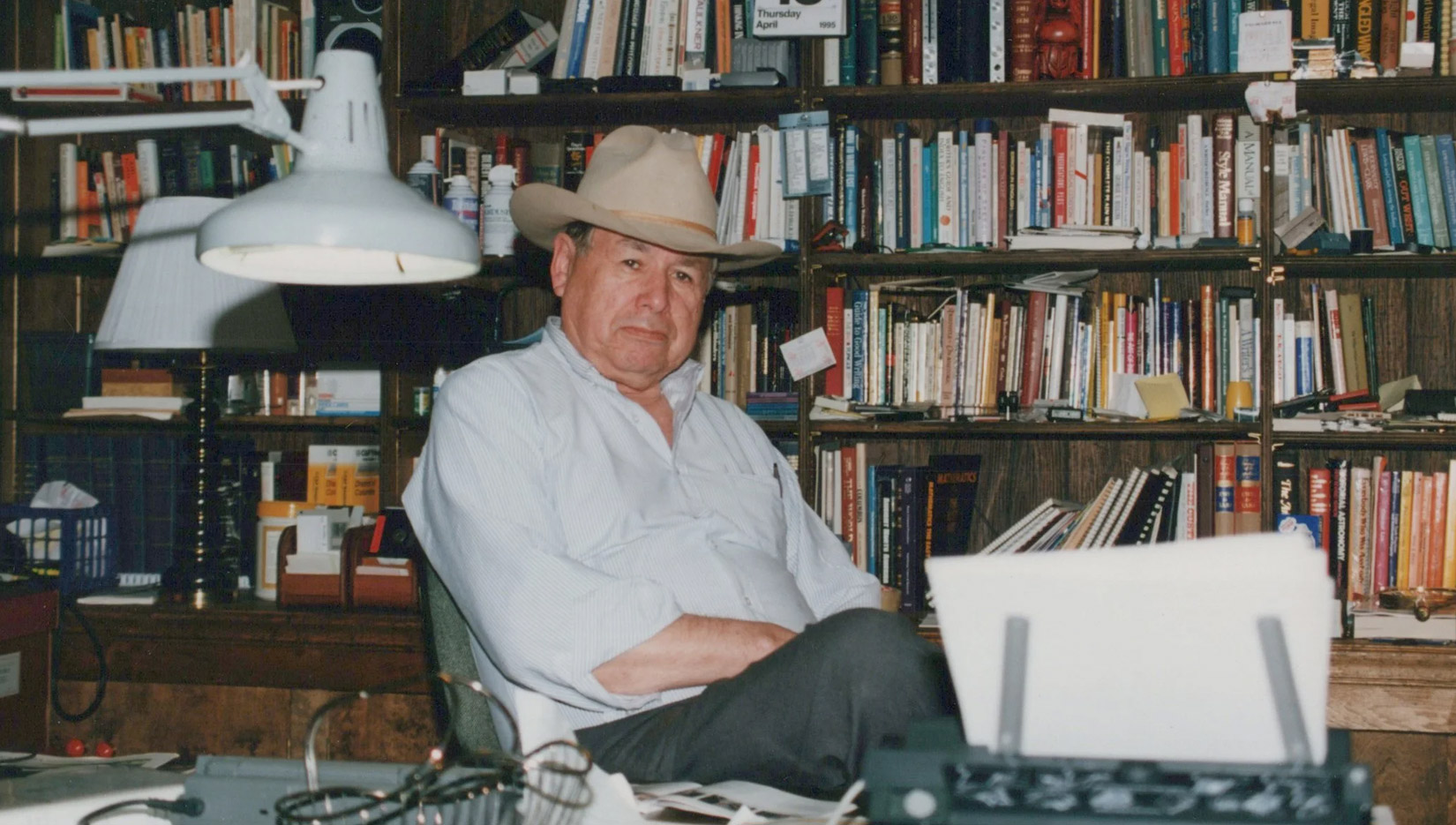
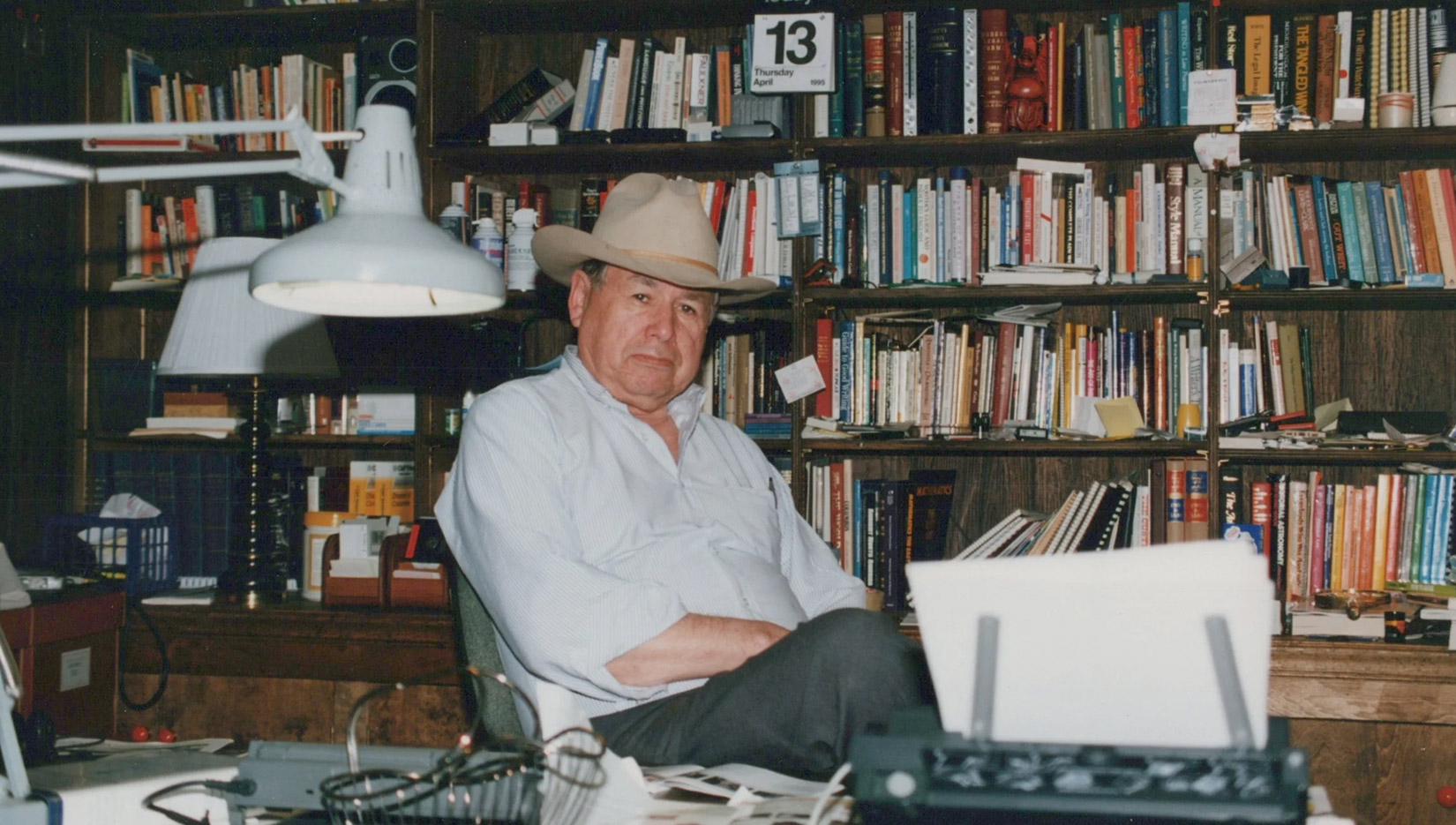 Hans Walker Jr. at his desk in his book-lined office. The desk calendar reads Thursday, April 13, 1995. The Walker Youngbird Foundation, which offers the Native Artist Residency, is named in honor of Walker and his father. (Photo: Walker Family Archives, courtesy of the Walker Youngbird Foundation)
PROVINCETOWN, Mass. Native visual artists, including citizens of the Cherokee Nation, the United Keetoowah Band of Cherokee Indians, and the Eastern Band of Cherokee Indians, have until Friday, Dec. 4, to apply for a four-week paid residency on Cape Cod.
The Walker Youngbird Native Artist Residency is a partnership between the Walker Youngbird Foundation and the Fine Arts Work Center, or FAWC, in Provincetown, Massachusetts. FAWC describes itself as one of the country’s longest-running residency programs for artists and writers. The residency picks one Native visual artist, and it begins May 23, 2027.
The selected artist gets a $2,500 stipend and paid travel to and from Provincetown. The artist also gets a private studio of 300 to 500 square feet with natural light and a private apartment on or near the FAWC campus. The apartment has a full kitchen and a private bathroom. The artist can use FAWC’s print studio, Risograph studio, and fully equipped wood shop. The print studio supports monotype, etching, silkscreen, lithography, collagraph, and relief printing.
The foundation says the residency is built around what the artist wants, and no finished work is expected. The residency ends with an event the artist designs, such as an exhibition in the FAWC Gallery, an artist talk, or an open studio.
Artists with families are encouraged to apply. Partners and family members are welcome, and two 2-bedroom apartments are set aside for artists with children. FAWC asks applicants to say early if they plan to bring anyone. One ground-floor apartment is fully accessible, and two others have no-step entrances.
To apply, artists must:
- be 18 or older;
- live in North America;
- be working visual artists at any career stage; and
- be available for the full four weeks.
Applicants must also be enrolled citizens of a federally or state-recognized American Indian Tribe in the United States, Alaska Native, of Native Hawaiian ancestry, or members of a recognized First Nation in Canada. Living in North America does not qualify an applicant on its own.
The list of eligible Tribes includes both federally recognized and state-recognized groups, and the two are not the same. Federally recognized Tribes, including the three Cherokee Tribal Nations, are historically sovereign Tribal Nations with a government-to-government relationship with the United States. State recognition is a designation made by an individual state government. It does not require a group to meet the federal standards that historical Tribal peoples meet.
Each week, 15 to 20 other artists and writers are in residence at FAWC. They can join a weekly reception, Thursday open studios and readings, and public artist conversations called Summer Salons. All of these are optional. Meals are not provided except at the weekly reception.
Three reviewers will choose the recipient: artist Duane Slick, artist Mala Iqbal, and Walker Youngbird Foundation founder Reid Walker. The recipient will be announced in late January 2027. Every applicant will hear the result by email, but the foundation does not give individual feedback.
A family legacy behind the name
Reid Walker writes in a foundation journal post that the foundation is named in honor of his father, Hans Walker Jr., and his grandfather. The post describes his father as a trailblazing lawyer who was among the first Native attorneys to gain national prominence. It says he led many landmark cases to improve life in Indian Country, including one before the U.S. Supreme Court. walkeryoungbird.org
Walker, who was Mandan, began his legal career in 1960 as general counsel for the Three Affiliated Tribes of Fort Berthold in North Dakota. He was a citizen of the Three Affiliated Tribes. The Three Affiliated Tribes are now known as the Mandan, Hidatsa and Arikara Nation. In 1971, Interior Secretary Rogers C.B. Morton named him to lead the new Indian Water Rights Office. He later became a partner at the Washington, D.C., law firm Hobbs, Straus, Dean & Walker. He died Dec. 20, 2015, at his home in Alexandria, Virginia, at age 89. ictnews.org +2
The Youngbird name comes from the family’s roots at Fort Berthold. According to a family obituary, Hans Walker Jr.’s father, Hans Walker Sr., was the son of Joseph and Susie Walker Youngbird of the Lucky Mound community. Hans Walker Sr. was a rancher and served on the Fort Berthold Tribal Council. fulkersons
Reid Walker writes that after his aunts died, he inherited sculptures and paintings by Allan Houser, Robert Penn, and Roger Broer. Caring for that collection led him to see art as something that moves a culture forward, not just something that preserves it. He says the foundation grew out of that idea, as a commitment to the next generation of Indigenous artists so they can “not only endure but thrive.” walkeryoungbird.org
The foundation was founded in 2024. It supports Native artists at what it calls pivotal moments in their development. Its other programs include an Emerging Native Arts Grant for early-career artists, which takes winter applications from December 2026 through January 2027. It also runs a Native Neon Residency in Kingston, New York, which takes applications in January and February 2027.
Artists can apply online at form.jotform.com/
Wado.
Cara Cowan Watts is a journalist for Cherokee411.com, an independent media company serving all three Cherokee Tribal Nations and Cherokees wherever they live. Contact: Cherokee411.com or [email protected].
Sources
- Walker Youngbird Native Artist Residency application page
- Walker Youngbird Foundation
- Reid Walker, “The Story of Walker Youngbird: A Legacy in Art,” Walker Youngbird Foundation journal
- ICT News, obituary of Hans C. Walker Jr.
- Bureau of Indian Affairs, “Morton Names Hans Walker Head of New Indian Water Rights Office,” Nov. 17, 1971
- Reba Jean Walker obituary, Fulkerson-Stevenson Funeral Home
- Application form
- Walker Youngbird Foundation email announcement, Nov. 20, 2026