
Federal Reserve Institute to Host June 25 Virtual Summit on Tribal Data Sovereignty, AI, and Economic Self-Determination
By Cara Cowan Watts, Cherokee411.com
MINNEAPOLIS — The Center for Indian Country Development (CICD) at the Federal
Reserve Bank of Minneapolis will host its 2026 Data Summit, Sovereignty in Numbers,
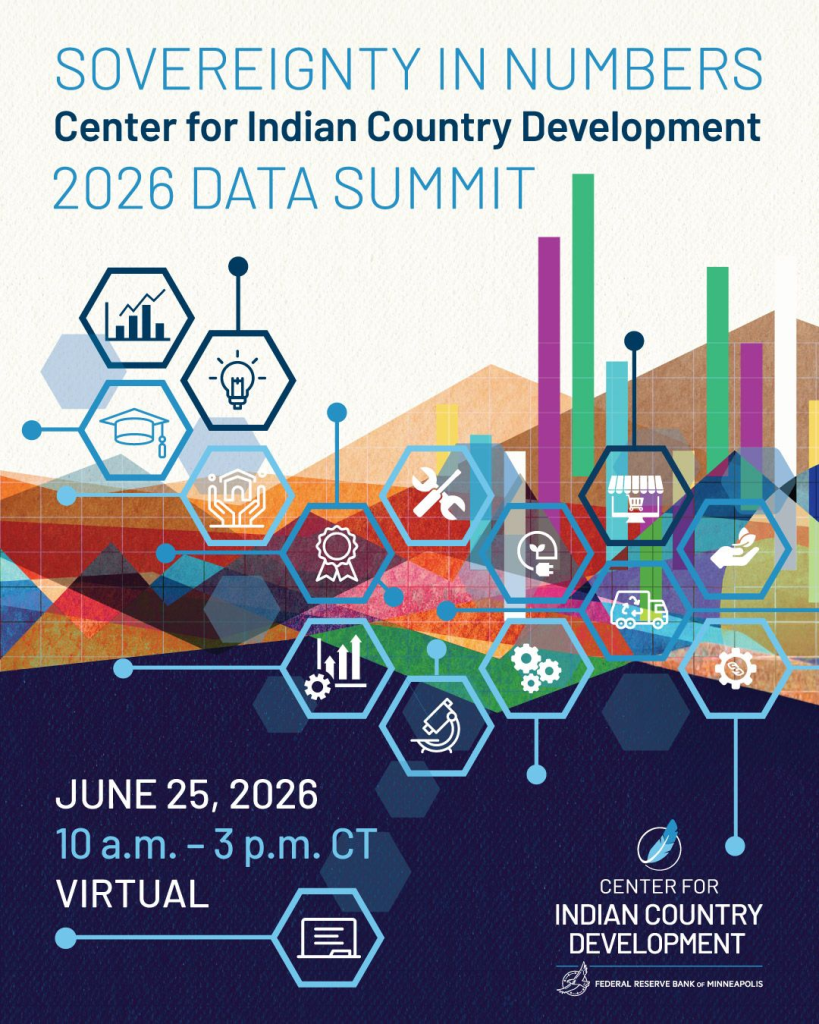
on Thursday, June 25, from 10 a.m. to 3 p.m. CT via virtual video. The free event will
bring together more than 20 tribal leaders, economists, and policy experts to examine
how Native nations are harnessing data — and navigating artificial intelligence — as
tools of economic self-determination.
The summit convenes at a moment of rapid change for Indian Country data
infrastructure. Tribal censuses, economic impact reports, and CICD’s own Survey of
Native Nations are equipping tribes with new analytical tools, while AI applications
introduce both risk and possibility for communities that have long faced data extraction
without benefit.
Among the speakers is H Trostle (Cherokee Nation), CICD senior policy analyst and
co-leader of the Survey of Native Nations, who will moderate the afternoon panel on
tribal council perspectives on taxation data and fiscal decision-making. Trostle’s
expertise centers on economic development and infrastructure on tribal lands.
Summit Agenda at a Glance
The five-hour program opens with a welcome and invocation, including song from the
Imnížaská drum group, an intertribal ensemble representing nations across Minnesota,
North Dakota, South Dakota, and Wisconsin. The agenda then unfolds across four
panels:
10:15 a.m. — Fireside Chat: Digital Sovereignty and the Future of Tribal
Economies. Traci Morris (Chickasaw Nation), executive director of the American Indian
Policy Institute at Arizona State University’s Sandra Day O’ Connor College of Law, joins CICD Director Casey Lozar (Confederated Salish and Kootenai Tribes) for a
conversation on tribal broadband, data governance, and AI as components of self-
determination. Morris is nationally recognized as a leading scholar in tribal digital
sovereignty and has testified before the Federal Communications Commission and
Congress.
10:45 a.m. — Presentation: A New Look at Tribal Enterprise. Ava LaPlante (Santo
Domingo Pueblo), CICD associate data scientist, will present new research addressing
data gaps in Native business ownership.
11 a.m. — Panel: AI on Indigenous Terms. Panelists include the Secretary/Treasurer
Michelle Beaudin (Lac Courte Oreilles Band of Lake Superior Ojibwe); Eric Ramos
(Blue Lake Rancheria Tribe), Senior Vice President at Tribal First/Alliant Underwriting
Solutions, and Michael Running Wolf (Lakota, Cheyenne), co-founder and lead architect
of First Languages AI Reality (FLAIR), who uses AI to reclaim Indigenous languages
and focuses on ethical AI application in respect of Indigenous data sovereignty.
Noon — Panel: Data and Recent Developments in Tribal Land Acquisition.
Speakers from the Rosebud Sioux Tribe Tribal Land Enterprise, the Fond du Lac Band
of Lake Superior Chippewa, and the Indian Land Tenure Foundation will discuss how
data tools are informing tribal land management decisions.
1 p.m. — Panel: Governing Through Numbers. Trostle moderates a conversation on
tribal taxation and fiscal decision-making with Former Vice President Danielle DeLong
(Ho-Chunk Nation); Effie Edsitty (Navajo Nation), executive director of the Office of the
Navajo Tax Commission; and Secretary Zechariah Harjo (Muscogee, Navajo,
Chickasaw, and Seminole nations), secretary of the nation for the Muscogee (Creek)
Nation. Edsitty has guided her office to collect an average of $148 million in tax revenue
annually over the past three years.
2 p.m. — Panel: The Role of Data in Capital Weaving in Indian Country. Jennifer
Chadwick (Choctaw Nation of Oklahoma), community development advisor at the
The Federal Reserve Bank of Kansas City moderates a panel on financing and capital
access with Brian (Wabjejak) Kirk (Citizen Potawatomi Nation) of Pawnee Nation
Behavioral Health; Mike Lettig (Navajo Nation), senior managing director and group
Head of Native American Financial Services at Huntington Bank, and Ted Piccolo
(Colville Confederated Tribes), senior director of Indigenous futures at Mission Driven
Finance.
About CICD
The Center for Indian Country Development is a research and policy institute housed at
the Federal Reserve Bank of Minneapolis. Its mission is to advance the economic self-
determination and prosperity of Native nations and Indigenous communities through
actionable data and research that inform public policy. CICD engages with Native
nations, businesses, and organizations; analyzes Indian Country economic data; and
contributes to public policy discussions to advance long-term prosperity for Indian Country.
Registration
The summit is free and open to the public. Registration is available online at the
Minneapolis Fed’s website. Attendees can access additional CICD resources, including the Survey of Native Nations and tribal economic research, at the same site.
Center for Indian Country Development
Event registration
The 2026 Center for Indian Country Development Data Summit
Join an exciting line-up of Indian Country thought leaders on June 25 for Sovereignty in Numbers: The 2026 Center for Indian Country Development Data Summit. Conversations will explore how, during a time of rapid change, tribes are leveraging emerging data opportunities in ways that safeguard tribal citizens and values.
Speakers will include:
- Secretary/Treasurer Michelle Beaudin (Lac Courte Oreilles Band of Lake Superior Ojibwe), Lac Courte Oreilles Band of Lake Superior Ojibwe
- Jennifer Chadwick (Choctaw Nation of Oklahoma), Federal Reserve Bank of Kansas City
- Former Vice President Danielle DeLong (Ho-Chunk Nation), Ho-Chunk Nation
- Effie Edsitty (Navajo Nation), Office of the Navajo Tax Commission
- Matthew T. Gregg, CICD, Federal Reserve Bank of Minneapolis
- Adelita Guerue (Sicangu Lakota, Klamath Tribe), Rosebud Sioux Tribe Tribal Land Enterprise
- Secretary Zechariah Harjo (Muscogee, Navajo, Chickasaw, and Seminole nations), Office of the Secretary of the Nation, Muscogee (Creek) Nation
- Emilia Holstine, Fond du Lac Band of Lake Superior Chippewa
- Imnížaská drum group (multiple Native nations)
- Brian Kirk, MPH (Citizen Potawatomi Nation), Pawnee Nation Behavioral Health
- Ava LaPlante (Santo Domingo Pueblo), CICD, Federal Reserve Bank of Minneapolis
- Mike Lettig (Navajo Nation), Huntington Bank
- Casey Lozar (Confederated Salish and Kootenai Tribes), CICD, Federal Reserve Bank of Minneapolis
- Maria Morin McCoy (Turtle Mountain Band of Chippewa), Community Member
- Traci L. Morris, Ph.D. (Chickasaw Nation), American Indian Policy Institute, Arizona State University
- Vanessa Palmer, Community Development and CICD, Federal Reserve Bank of Minneapolis
- Ted Piccolo (Colville Confederated Tribes), Mission Driven Finance
- Eric Ramos (Blue Lake Rancheria Tribe), Tribal First, Alliant Underwriting Solutions
- Michael Running Wolf (Lakota, Cheyenne), First Languages AI Reality
- Alene Tchourumoff, Community Development and CICD, Federal Reserve Bank of Minneapolis
- H Trostle, CICD, Federal Reserve Bank of Minneapolis
- Howard D. Valandra (Rosebud Sioux Tribe), Indian Land Tenure Foundation
- Lakota Vogel (Cheyenne River Sioux Tribe), Four Bands Community Fund, Federal Reserve Bank of Minneapolis Board of Directors