

By Cara Cowan Watts, Cherokee 411

Clayton Fulton, Cherokee Nation citizen, was appointed Chief of Staff of the Indian Health Service by U.S. Health and Human Services Secretary Robert F. Kennedy Jr. (Photo courtesy of Indian Health Service)
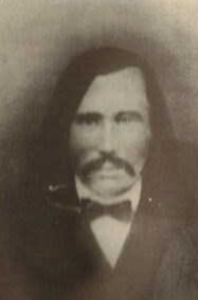
Cherokee Senator John Rotten Ross (1836–1880), great-great-great-grandfather of IHS Chief of Staff Clayton Fulton. Ross was orphaned young and later served as a Senator for the Flint District of the Cherokee Nation.
MUSKOGEE, Okla. — The appointment of Cherokee Nation citizen Clayton Fulton as Chief of Staff for the Indian Health Service marks a proud moment not only for his family, but for all of Indian Country. A son of Oklahoma soil and generations of Cherokee leaders, Fulton’s journey from small-town Muskogee to one of the highest offices in federal Indian health policy embodies what dedication, education, and deep tribal roots can achieve.
Fulton, appointed by U.S. Health and Human Services Secretary Robert F. Kennedy Jr., is the son of Dale Fulton and grandson of Albert Wayne Fulton. His Cherokee lineage traces directly to his great-great-grandfather, Albert Bates Ross (Dawes Roll No. 2377, Flint District), and great-great-great-grandfather, John Rotten Ross—born in 1836, orphaned young, and later a Cherokee Senator for the Flint District before his death in 1880. Their legacy of leadership and service runs deep, a thread of public duty and perseverance woven through generations.
Born in Muskogee, Clayton was valedictorian, Student Body President, and a member of the All-State Academic Team at Oktaha High School. A first-generation college student, he earned a full scholarship to Northeastern State University, where he majored in Finance and joined the President’s Leadership Class. His Cherokee Nation Businesses internship sparked a lifelong passion for tribal economic development.
He went on to earn an MBA in Native American Enterprises from Northeastern State University and a Juris Doctor from the University of Michigan Law School, where he twice won the Doolin Prize for Indian Law Scholarship. Returning home, he served as Assistant Attorney General for the Muscogee (Creek) Nation, focusing on intertribal relations, self-governance, and economic infrastructure.
Clayton’s rise reflects the story of Indian Country’s next generation of leadership—grounded in community, driven by purpose, and proud of heritage. His parents’ working-class example—a truck driver father and a mother who went back to school to become a teacher—instilled in him the belief that hard work and education can lift families and nations alike.
Fulton is married to Olivia Fulton, a citizen of the Choctaw Nation. Together, they represent a modern story of intertribal unity and shared commitment to service in Indian Country.
At IHS, Fulton now takes on one of the most influential roles in Native health policy, coordinating key federal initiatives for 574 federally recognized tribes. His appointment is a milestone for Cherokee Nation and for all tribal citizens who believe in self-determination through service.
“I believe that lasting change begins at the community level,” Fulton said. “My approach centers on equipping grassroots leadership, supporting local capacity, and creating steady, intentional growth that strengthens families, culture, and the community at large.”
For the Cherokee people, Clayton Fulton’s story is not just a personal achievement—it is a continuation of a family and a Nation’s enduring promise to lead, serve, and uplift Indian Country.